Image Placeholder
Fact-Checking & Dispelling Myths
The Erased Truth, Vanished Voices, and Frozen Blood Tears
Recently, the internet has been flooded with rhetoric claiming that "228 is an electoral manipulation" or "just rioters causing trouble." This report sets aside political squabbles and directly confronts internet rumors with the most solemn historical facts, compiling data from the National Archives Administration, Executive Yuan investigation reports, and real historical images.
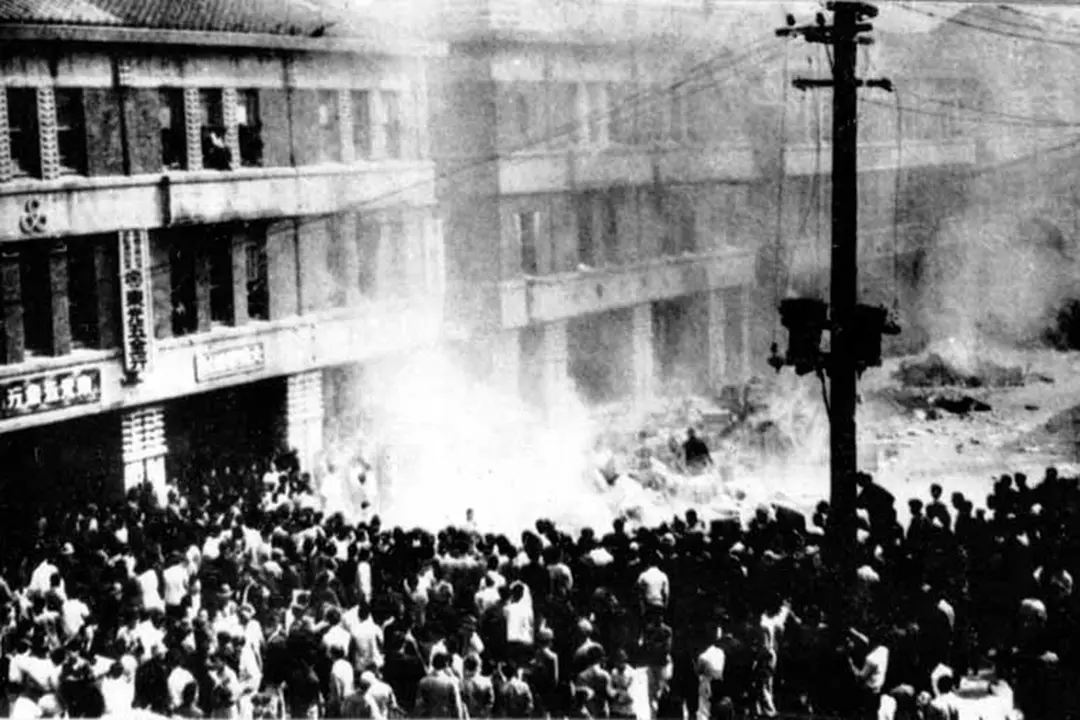
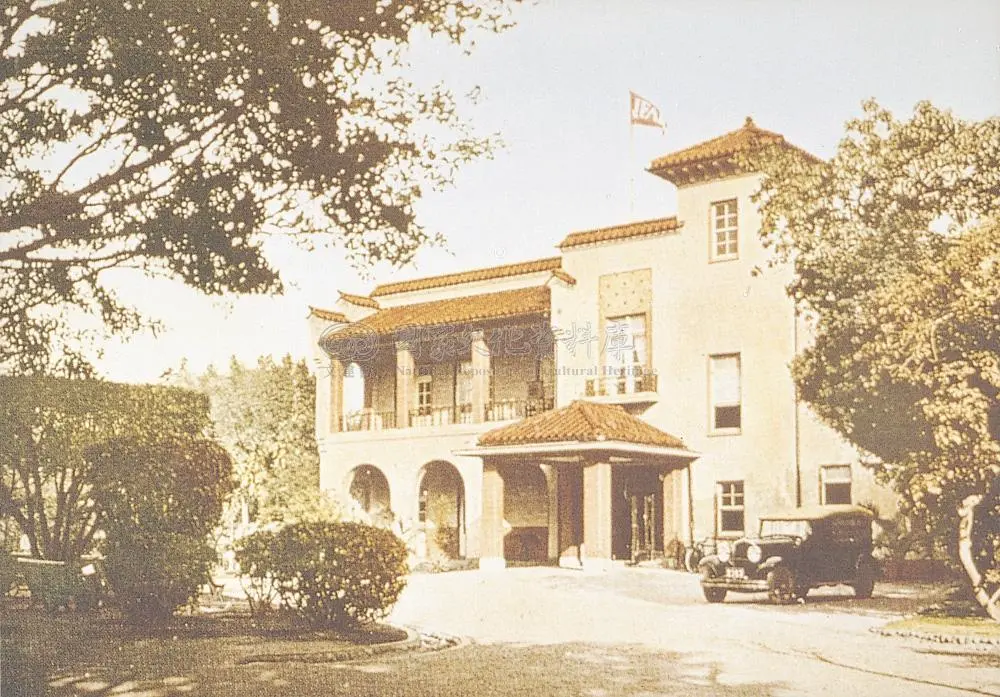
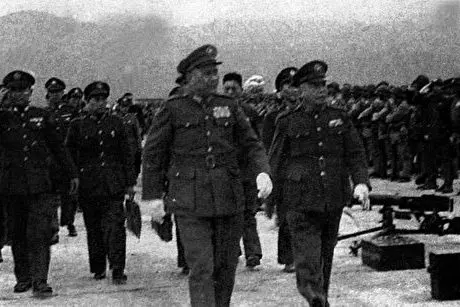
Restoring the facts is the first step to correcting the narrative. Through a real timeline and historical photos, understand how the incident evolved from a confiscation bloodshed into an island-wide military suppression.
When historical facts focus on individuals, data reveals the overall picture. Statistics show that victims included a large number of social elites, such as public representatives, doctors, lawyers, and students. This was a systematic cultural deprivation.
After viewing the timeline and elite casualty data, try walking into that cold spring. History is no longer just words in a textbook, but countless battles between life and conscience. Facing a ruthless state apparatus, what would you choose?
💡 The following scenarios are adapted from the real life trajectories of 228 victims.
In addition to compiling the aforementioned visual historical materials and charts, we know deeply that only through rigorous academic discourse and extensive empirical research can we thoroughly resist out-of-context political manipulation. Below is the core Full Report of this project.
In the rapidly developing digital information environment of our time, historical events have transcended academic research, becoming core arenas for shaping political legitimacy, mobilizing emotions, and conducting cognitive warfare. Recently, coordinated attacks by specific accounts have appeared on major social platforms, distributing short videos packaged with specific narratives. Their core argument accuses the current ruling party of deliberately "manipulating the 228 Incident," alleging that official institutions acquire political benefits and tear society apart by distorting historical facts, exaggerating specific victims, and covering up Mainlander casualty data. Such phenomena not only highlight the high sensitivity of the 228 Incident but also reflect how easily historical memory can be fragmented and weaponized.
To objectively examine the grave accusations of "manipulating history" and dismantle the political rhetoric hidden behind short videos, we must return to the most rigorous historical textual research, jurisprudential analysis, and demographic empirical evidence. As the most significant historical tragedy in 20th-century Taiwan, the 228 Incident involved broad dimensions, covering the state institutional violence of the early post-war period, ethnic conflicts, institutional governance failure, and the subsequent decades of authoritarian imprisonment and White Terror. Based on declassified official archives, research by academic institutions, demographic statistics, and authoritative reports released by the Memorial Foundation of 228, this report conducts an in-depth analysis on the political accountability of the incident, the debate over the true casualty figures, the legal boundaries of transitional justice, the true historical role of the CCP, and the specific operational mechanisms of contemporary online disinformation. By combing through multiple archives and empirical data, this report aims to clarify the boundary between historical truth and political manipulation, providing professional insights with depth, breadth, and a jurisprudential foundation to respond to contemporary society's urgent need for historical truth and information literacy.
When exploring any historical narrative regarding the 228 Incident, the primary task is to establish the structural background of its outbreak and the accountability of the state apparatus. During the decades of martial law and authoritarian rule, official narratives held absolute interpretative power, framing the event one-sidedly as "Communist incitement," "the remnants of Japanese enslavement education," or simply "mob rebellion." However, with the advancement of Taiwan's democratization and the declassification of state classified archives, the historical consensus among academia and officials has undergone a fundamental shift, focusing instead on the failure of the state system and the abuse of public power.
Although the apparent trigger of the 228 Incident that erupted in 1947 was the bloodshed over contraband cigarette inspections in Dadaocheng, Taipei on February 27, the deep structural causes that sparked the island-wide resistance actually stemmed from Taiwan's unique political and economic governance structure in the early postwar period. According to the 'Research Report on the Responsibility for the 228 Incident', co-authored by multiple historians (including Huang Hsiu-cheng, Hsueh Hua-yuan, Chen Yi-shen, Chang Yen-hsien, Lee Hsiao-feng, Chen Tsui-lien, etc.) commissioned by the Memorial Foundation of 228 and published in 2006, the 'Chief Executive's Office' system established by the Nationalist Government in Taiwan at that time was a highly centralized alternative system. This system concentrated administrative, legislative, judicial, personnel, and military powers in the hands of Chief Executive Chen Yi, forming an autocratic ruling structure operating outside the democratic constitutional system.
In terms of economic resource distribution, the government implemented extremely strict material control and monopoly systems, bringing daily necessities such as tobacco, alcohol, and matches into government monopoly. Coupled with the postwar depression, material shortages, and the government transporting large amounts of Taiwanese rice to mainland China to support the Chinese Civil War, Taiwan experienced severe inflation and massive unemployment, leaving the people destitute. In terms of political power distribution, Mainlander officials almost monopolized all decision-making positions in top government tiers and state-owned enterprises, and official corruption was rampant. Meanwhile, the troops stationed in Taiwan had poor military discipline, frequently bullying civilians. This top-down, comprehensive institutional deprivation and cultural alienation led to extreme dissatisfaction and despair towards Chen Yi's government among Taiwanese society, from intellectuals and local gentry to the general public. Therefore, when the accidental violent incident of contraband cigarette inspection occurred, the long-suppressed public anger erupted instantly. Local elites quickly formed the '228 Incident Settlement Committee' in the early stages of the event. Its core demand was not the armed rebellion or seeking Taiwan independence that officials claimed at the time, but strongly 'demanding political reform', 'opposing political monopoly', and 'fighting against corruption'.
In exploring the serious issue of responsibility, historical research reports clearly point out that Chiang Kai-shek, Chairman of the Nationalist Government at the time, was the highest decision-maker who must bear the greatest and ultimate responsibility for the incident. Although in the early stages of the outbreak, some Taiwanese civilian elite groups and certain intelligence channels attempted to convey the true demands of Taiwanese society and the reality of officials forcing the people to rebel to the central government in Nanjing, Chiang Kai-shek ultimately chose to believe the biased reports of local military and political leaders such as Chen Yi, Chief Executive of Taiwan Province, and Lee Yi-chung, Chairman of the KMT Taiwan Provincial Committee. These reports deliberately distorted civilian reform demands as 'instigated by treacherous bandits', 'rioter rebellion', and the manifestation of 'the remnants of Japanese enslavement education'. Based on this information, Chiang Kai-shek made the fatal decision to dispatch a large army to Taiwan for military suppression.
After the troops landed successively from Keelung and Kaohsiung on March 8, 1947, they immediately launched bloody operations called 'pacification' and 'village cleansing' across Taiwan. In this process, Chen Yi, Chief Executive of Taiwan Province and Commander-in-Chief of the Taiwan Garrison Command, bore inescapable responsibility as the military and political head. His subordinates, such as Ke Yuan-fen (Chief of Staff of the Garrison Command), Peng Meng-ji (Kaohsiung Fortress Commander), Shih Hung-hsi (Keelung Fortress Commander), and Liu Yu-ching (Commander of the Reorganized 21st Division), employed extremely disproportionate force when carrying out suppression missions. The army not only indiscriminately machine-gunned urban areas but also collaborated with intelligence agencies to conduct large-scale indiscriminate arrests, secret assassinations without legal trial, and private executions.
The cruel operation of this state apparatus not only caused countless innocent civilian casualties but also specifically eliminated an entire generation of Taiwanese local elites. According to statistics, up to 80% of county and city councilors, doctors, lawyers, writers, and journalists at the time were killed or went missing in this suppression, causing an irreparable and devastating blow to Taiwan's judiciary, journalism, and campuses (education sector). Even worse, after the incident, rather than punishing the military and political leaders who slaughtered innocents, Chiang Kai-shek promoted Chen Yi to Governor of Zhejiang Province and elevated Peng Meng-ji to Commander-in-Chief of the Taiwan Garrison Command. This mass violence, lacking due process and initiated and endorsed by the state's highest core of power, established the 228 Incident's core definition in modern historiography, political science, and jurisprudence as 'state illegal infringement' and 'authoritarian state terrorism'.
In the 228 Incident, 'exactly how many people died or went missing' has been the most controversial issue in historical narratives for over half a century, and the easiest to be appropriated by various political forces and contemporary online cognitive warfare. Ranging from thousands to hundreds of thousands, commentators with different political stances often selectively use specific data to support their political agendas or smear opponents. To thoroughly clarify the truth about casualty data, one must strictly distinguish between three distinct measurement dimensions and scientific methodologies: 'historical literature estimation', 'demographic projection', and 'transitional justice compensation empirical review'.
During the incident and in the following years, various parties proposed vastly different casualty figures based on different intelligence sources and political purposes. To clearly present the complexity of these historical estimates, structured data below illustrates the numbers claimed by various parties:
| Source / Reporter Identity | Year Reported | Claimed Mainlander Casualties | Claimed Taiwanese & Overall Casualties |
|---|---|---|---|
| Then-Defense Minister Bai Chongxi | 1947 | - | Military/Police/Taiwanese total dead/injured: 1,860 |
| Taiwan Garrison Command | 1947 | Dead/injured/missing: 1,958 | Dead/injured/missing: 643 (also a record of 3,200 dead) |
| Shanghai Ta Kung Pao / Police agencies | 1947 | Dead 432, injured 2,126, missing 85 (Total 2,643) | No specific comparison |
| Security Office | 1947 | - | Dead: 6,300 |
| Su Xin (Taiwanese Communist) | 1949 | - | No fewer than 10,000 dead |
| Then-US Vice Consul George H. Kerr | 1947 | - | Dead: 20,000 |
| Memorial Foundation of 228 (Empirical) | Post-2006 | Dead/missing 89, injured 1,389 | Total compensated received: 10,280 |
It is clear from the table above that there was a massive gulf between the official reports of the time (e.g., Bai Chongxi's 1,860) and the estimates of foreign observers and civilians (e.g., George H. Kerr's 20,000). Academia Historica scholar Hou Kun-hung once analyzed that official reports severely underestimated the numbers because they deliberately ignored the massive number of unnatural deaths—those secretly executed by the army without formal trial or thrown directly into the sea or buried; meanwhile, overestimations in civilian or overseas reports might have been mixed with hearsay and deliberate exaggeration amidst extreme societal panic. Moreover, Lai Tse-han, chief author of the 'Research Report on the 228 Incident', pointed out that after KMT troops landed on March 8, they expended 140,000 rounds of ammunition; the resulting casualties absolutely exceeded the thousands officially acknowledged. However, to say that the death toll was in the tens of thousands, under the space-time context of the time, the processing and burial of corpses would be difficult to leave entirely no trace within just a few weeks. Hence, there is room for discussion regarding the extreme numbers from both sides.
Seeking scientific answers without complete remains and rosters, scholar Chen Kuan-cheng employed a 'demographic projection' model in the 'Research Report on the 228 Incident', promoted during President Lee Teng-hui's tenure and published by the Executive Yuan in 1992. The core assumption of this methodology was: lacking precise annual death statistics for 1946 in Taiwan, it compared total deaths between 1947 and 1948. Data showed 114,192 total deaths island-wide in 1947 (the incident year) and 95,340 in 1948; 1947 exceeded 1948 by 18,856 deaths. Chen Kuan-cheng further attributed the entire abnormal increment in deaths among males aged 15 to 64 in 1947 over 1948 to the political suppression of the 228 Incident, consequently estimating the incident's death toll to fall between 18,352 and 27,923. Another scholar, Li Chiao, also utilized a linear regression model to project similar figures of 18,446 to 19,646. These numbers were subsequently widely cited, even being written into some high school textbooks.
However, this deductive method relying purely on total demographic death fluctuations faced extremely severe challenges and criticism from academia and the practical realm. Former legislator Tsai Cheng-yuan and some public health experts pointed out through objective epidemiological evidence that 1947 coincided with the collapse of postwar Taiwan's public health system and massive epidemics of infectious diseases (such as smallpox, cholera, malaria). Hence, the annual overall death toll was inevitably higher than other relatively stable years. Counting the 'excess deaths' caused by infectious diseases or other social upheavals entirely as victims of the 228 suppression commits severe 'over-inference' and 'attribution fallacy' in scientific methodology. Additionally, Academia Sinica Academician Hu Fu, one of the reviewing members of that year's research report, publicly noted huge blind spots in calculating deaths of a single political event from the overall population fluctuation in early postwar Taiwan. Taiwanese society then experienced drastic population mobility, including many Taiwanese conscripts stranded in mainland China, veterans going to the mainland for the civil war, and Mainlanders fleeing back in fear after the incident. Amidst chaotic household registration systems and frequent cross-border movements, arbitrarily concluding tens of thousands died from massacre solely based on the difference in household death registrations was considered an ill-considered exaggeration.
When attacking 'DPP manipulation of 228', contemporary internet accounts frequently employ a core narrative claiming 'Mainlander casualties outnumbered Taiwanese', accusing the government and the 228 Foundation of deliberately covering up historical facts about Mainlander victims, attempting to twist the 228 Incident from 'state suppression of the people' into a mere 'ethnic massacre of Mainlanders by Taiwanese'. The primary basis for this narrative mostly comes from 'Inside the Taiwan Incident' authored by Tang Hsien-lung, a resident reporter for Shanghai's Ta Kung Pao, who cited police statistics at the time claiming: 432 Mainlanders dead, 85 missing, 2,126 injured, totaling 2,643 victims. Attackers contrast this with the early number of Taiwanese victims recognized by the 228 Foundation (over two thousand), thereby concluding Mainlanders suffered more deeply.
However, this narrative, which deliberately extracts a single early official document, completely fails to withstand the rigorous examination of modern historical archives. The Memorial Foundation of 228 deeply understood the importance of this issue. In its subsequently expanded publication 'Research Report on the Truth and Transitional Justice of the 228 Incident', it specifically commissioned scholars to add monographs like 'Discussion on Mainlander Casualties in the 228 Incident' and 'Analysis of the Official Records of the 228 Incident Death Toll', conducting extremely detailed archival cross-checking and textology on Mainlander casualty data. Rigorous empirical research revealed that high-level government and military systems at the time, to prove to the central government in Nanjing the 'legitimacy' and 'urgency' of dispatching armies for suppression, deliberately used the extremely vague term 'casualties' in official documents. They conflated vast numbers of 'minor scratches' and 'property losses' with 'deaths', thereby exaggerating the actual scale of Mainlander deaths. Furthermore, some official reports even grafted the data of Taiwanese killed by the army's indiscriminate machine-gunning, or Taiwanese civil servant casualties, incorporating them into the casualty figures for Mainlander civil servants.
According to the Foundation's final conclusion after exhaustive archival research: In the 228 Incident, Mainlanders were indeed implicated initially due to masses losing control, but their actual combined total of dead and missing was 89 people; of which 38 were Mainlander civil servants beaten to death by civilian crowds due to ethnic conflict, and 8 were ordinary Mainlander citizens. The remaining Mainlander victims were mostly injured (totaling 1,389).
This ironclad evidence based on official archival cross-checking directly and thoroughly refutes the online false narrative that 'Mainlander deaths outnumbered Taiwanese'. The Mainlander ethnic group indeed faced violence from some Taiwanese civilians in the incident's early stages, reflecting crowd loss of control caused by language barriers, cultural friction, and anger towards a corrupt regime. However, equating several days of 'Horizontal civilian blind violence' with Violence' with the subsequent months-long 'Vertical State institutional military suppression Violence' (using dumdum bullets, heavy machine-gunning, and executing thousands of elites and civilians without trial), and even forging numerical comparisons, commits the most severe category errors and slippery slopes in historiography, jurisprudence, and political morality.
In current digital cognitive warfare, beyond macroeconomic debates, attackers frequently zoom in to scrutinize specific historical cases, thereby questioning that the compensation standards of the '228 Incident Disposition and Compensation Act' harbor political bias and ethnic discrimination. Among them, the comparison between the 'Liu Ching-shan Case' and the 'Ho Luan-chi Case' raised by columnist Chang Jo-tung is a typical and widely cited example online, utilized to accuse officials of 'downplaying history' and 'selectively granting justice'. To clarify such accusations, one must delve deeply into the jurisprudential foundations and legal requisites of transitional justice.
Historical Restoration of the Liu Ching-shan Case: Liu Qing-shan was a 28-year-old Mainlander civil servant at the Monopoly Bureau's Taichung Branch during the 228 Incident. On March 2, 1947, when angry Taichung crowds surrounded the residence of former Taichung County Magistrate Liu Cun-zhong in protest, Liu Qing-shan rushed out and fired at the crowd, injuring several protesters. This provoked extreme outrage from the crowd, who immediately surrounded and severely beat him. According to some official archives and eyewitness records, after he was hospitalized, rioters allegedly stormed his ward on the night of March 3, cutting off his ears and nose, gouging out his eyes, and brutally murdering him. However, recent research reports and official records (such as the Secrecy Bureau archives) only state his cause of death as "cerebral hemorrhage due to severe blunt force trauma to the head," without detailing the brutal torture. Commentators violently attack this, believing the current transitional justice narrative deliberately "downplays" the historical truth of a Mainlander civil servant slain by a mob, and that his family received no compensation or rehabilitation from the 228 Foundation, deeming it extremely unjust.
The Tortuous Course of the Ho Luan-chi Case: Forming a sharp contrast is Taiwanese citizen He Luan-qi. At the time of the incident, the 4th Military Police Regiment accused He Luan-qi of "leading a mob to beat Mainlanders" and even specifically "personally murdering Monopoly Bureau official Zhuang Qing-shan (a misnomer for Liu Qing-shan)." However, after being tried by the Taiwan High Court, he was acquitted in 1948 of suspected rebellion due to "insufficient evidence." Unfortunately, the following year (1949), after getting entangled in other debt disputes, the Garrison Command framed He Luan-qi for "intimidation, fraud, disrupting finance, inciting hooligans, and plotting treason." The Central Martial Law Command sentenced him to death, executing him in August that year. Even though his execution occurred in 1949 and his ostensible charges weren't directly linked to the 228 resistance, the Memorial Foundation of 228, through rigorous investigation, determined that his subsequent framing and execution were an extension of the authoritarian government's settling of scores and "infringement by public power" following the 228 Incident. Thus, they recognized him as a 228 victim and granted compensation. In 2023, the Ministry of Justice further announced the exoneration of his judicial and administrative injustices.
This stark contrast between two extreme cases, within online forums lacking legal literacy, is easily manipulated into political incitement material claiming "the DPP government only compensates Taiwanese rioters while ignoring victimized Mainlander civil servants." However, if we return to the legislative spirit and jurisprudential foundation of the "228 Incident Disposition and Compensation Act" for an in-depth analysis, we will find that this difference in treatment does not stem from alleged ethnic bias but from strict legal definitions of "power structure" and "illegal subjects."
Transitional justice ( Transitional Justice) centers globally in international law and political science on addressing systematic, large-scale human rights violations caused by the "state apparatus abusing public power." Modern constitutional states legitimately monopolize the use of violence (including police, military, intelligence agencies, and judicial powers). When an authoritarian state weaponizes these formidable powers to illegally arrest, massacre, and torture its people, the people are absolutely marginalized with no avenues for recourse within the system. Therefore, when a state democratizes, the successor democratic government must assume the historical and legal responsibility to investigate the truth, compensate victims, and rehabilitate their reputations. According to Articles 7 and 8 of the Act, although the scope of compensable damage is broad, its core jurisprudential premise is: the victim's injury must be caused by "infringement by civil servants and public power."
Applying this standard to the Liu Ching-shan case: As a Monopoly Bureau official executing public duties, Liu Ching-shan was beaten and even brutally murdered by the masses during the conflict. Legally, this falls under generic criminal code offenses like 'homicide' and 'riot'. In the space-time context then, the Nationalist Government, as the ruling entity exercising substantive control over Taiwan, still wielded powerful authority for judicial investigation and armed punishment. In other words, though a tragic victim, what Liu Ching-shan faced was 'Horizontal civilian illegal violence', Violence', and his victim status and family rights were absolutely protected and prosecuted under the state legal system at the time.
Conversely, examining the Ho Luan-chi case: Even though Ho Luan-chi faced accusations of participating in the riot initially, and was later pronounced innocent by the court, what he ultimately confronted was the 'state military system and intelligence agencies', which possessed absolute power of life and death without checks and balances. Lacking guarantees of due process, the Garrison Command executed him on trumped-up political and economic charges. This is classic 'Vertical top-down institutional violence'. State Violence'. Ho Luan-chi had nowhere to redress his grievances during the authoritarian era; his right to life was illegally deprived by the state apparatus. This is precisely the absolute target that post-democratization transitional justice mechanisms must intervene in, investigate, and compensate.
Therefore, conflating 'civilian criminal acts against civil servants' with 'the state apparatus's illegal massacre of civilians', and demanding equal compensation from transitional justice institutions for both, is the most common and confusing jurisprudential slippery slope in contemporary online information warfare. This is not apathy toward the loss of Liu Ching-shan's life, but a fundamental discrepancy in legal jurisdiction and the subjects of historical accountability. Ignoring this jurisprudential foundation to view the Foundation's compensation list as evidence of 'political parties manipulating ethnic antagonism' or 'showing favoritism' genuinely deviates severely from the basic principles of modern nations ruled by law. Up to the expiration of the application deadline in January 2022, the Foundation authorized, accepted, and issued compensation to 10,280 victims. Behind every application case lies rigorous cross-referencing and certification based on archives by an independent and transcendent board of directors and expert scholars. The establishment and operation of this mechanism are truly the concrete practice of Taiwanese society healing historical trauma through the rule of law, unequivocally not a tool for specific political parties to manipulate history.
In the battle over the historical interpretative rights of the 228 Incident, not only do debates span different political spectrums within Taiwan, but the strong intervention and historiography construction by the Chinese Communist Party (CCP) have added highly complex transnational dimensions to contemporary digital cognitive warfare. In recent years, CCP officials have frequently and high-profilely held 228 Incident commemorative events. Their Taiwan Affairs Office spokesperson even publicly defined the 228 Incident as "a righteous action by Taiwan compatriots resisting autocratic rule and fighting for basic rights, which is also a part of the Chinese people's liberation struggle," attempting to forcibly co-opt Taiwan's spontaneous civilian democratic resistance into the CCP's modern communist revolution historiography.
In the CCP's high-profile political propaganda commemorating the 228 Incident, the iconic historical figure frequently brought to the table is the early Taiwanese Communist Party leader, Xie Xue-hong. In the CCP's narrative system, Xie Xue-hong—who even stood on the Tiananmen rostrum alongside Mao Zedong—is molded into the absolute core leader of the 228 Incident. Historical archives show Xie studied leftist ideology in Shanghai and Soviet Russia early on, partook in founding the Taiwanese Communist Party in 1928, and organized leftist groups in Taichung post-war. When the 228 Incident spread to central Taiwan, she indeed participated in the Taichung armed militia, the "27 Brigade." However, authoritative academic historical research posits extremely robust empirical rebuttals to the CCP's deliberate exaggeration of Xie and the Communist Party's influence in the 228 Incident. Academia Sinica Modern History Associate Research Fellow Chen Yi-shen points out that while Xie, as a Taiwanese Communist affiliated with the CCP underground party, holds historiographical significance, in the 1947 context, Taiwanese Communist members were extremely scarce. They fundamentally lacked the organizational capacity to exert a "leadership role" in an island-wide, large-scale resistance.
Regarding the '27 Brigade', enshrined by the CCP as a paragon of armed revolution, former 27 Brigade commander Chung Yi-jen, in his capacity as an eyewitness, once publicly clarified: The external claim that Hsieh Hsueh-hung 'organized or rallied' the 27 Brigade is entirely erroneous historical imagination. The true historical context is that in early March 1947, Taichung citizens, dissatisfied with government suppression, spontaneously besieged public offices and police stations, gathered weapons, and subsequently established this armed militia. Its primary purpose was to 'autonomously maintain social security and order through civilian strength under a completely dysfunctional government system', and assumed the defensive mission of retreating to Puli to carry out resistance as the Nationalist Army's 21st Division approached Taichung. Hsieh Hsueh-hung joining and participating in leading the 27 Brigade was largely because she then faced assassination threats from political rivals or intelligence personnel, requiring the protection of this formidable civilian armed force; it was not her unilaterally creating and commanding the brigade for communist revolution. Hsueh Hua-yuan, Chairman of the Memorial Foundation of 228, also emphasized that the underground Communist Party had extremely few members at the time; their influence on the entirety of the 228 Incident was exceedingly limited, absolutely averting any critical turning point role.
Delving into the evolution of this historical interpretation reveals a highly ironic political phenomenon. As discussed in the "Response Approaches" analysis in Chapter 1 of the "Research Report on the Truth of the 228 Incident and Transitional Justice," Taiwanese civilians struggled between the Settlement Committee's "intra-system reform" and "armed resistance"; the core momentum was always based on despair toward political corruption and a thirst for democratic autonomy. Yet, during the 1947 event, to rationalize the legitimacy of mobilizing massive central forces to massacre people indiscriminately, high-ranking military and political KMT officials under the authoritarian regime (such as Chen Yi) deliberately exaggerated the false threat of "Communist bandits inciting rebellion in Taiwan" to Chiang Kai-shek. Fast forward decades to today, to meet the political needs of its united front work against Taiwan and shape the historical narrative that "the revolutions on both sides originate from the same source, jointly resisting the KMT," the CCP paradoxically also chooses to forcefully inflate the Communist Party's influence in the 228 Incident.
This paradoxical convergence in historical narratives between the 'former authoritarian KMT' and 'contemporary CCP' remains a highly destructive link in online cognitive warfare today. By forcibly linking the 228 Incident with 'Communist armed rebellion', attackers not only internally dilute the illegitimacy of state organs mobilizing the army to massacre civilians back then (rationalizing it as an anti-communist war), but also can utilize it as a weapon in contemporary political struggles, accusing the DPP government pushing for transitional justice of 'actually rehabilitating communist spies'. To this end, authoritative research reports definitively analyze that a strict temporal rupture and motivational discrepancy exist between spontaneous civilian democratic resistance and those truly involved in CCP underground party activities during the subsequent White Terror, categorically forbidding brutal reduction into a single communist rebellion event.
Returning to the core proposition faced at the beginning of this report: "Recent internet accounts continuously dispatch videos attacking the DPP for manipulating 228," we must strictly examine this phenomenon within the framework of contemporary digital information warfare, algorithmic diffusion, and disinformation propagation. The typical characteristic of such attacks lies in cleverly stitching together partial genuine historical details or personal backgrounds with vast amounts of fabricated data and distorted jurisprudential concepts. By inciting mass emotions and a sense of deprivation, they aim to completely destroy the credibility of official transitional justice institutions.
The 'Taiwan FactCheck Center' recently issued a detailed verification report addressing a widely circulated piece of typical 228-related disinformation. That online rumor targeted Yang Chen-lung, former director of the National 228 Memorial Museum, alleging: 'Yang Chen-lung served time for homicide, was later jointly nominated by Tsai Ing-wen and Su Tseng-chang as director, drew a 300,000 NTD monthly salary, and enjoyed a preferential 18% retirement deposit rate as a political appointee.' Upon the FactCheck Center accessing records from relevant agencies and conducting on-site verifications, it uncovered that this message utilized the most classic information warfare manipulative tactics: 'seven parts truth, three parts lie' and 'misattribution'. The rumor's background regarding Yang Chen-lung having committed a crime and served prison time during his youth indeed 'conforms with facts'; however, the rumor's entire latter half consisting of financial and institutional accusations meant to incite public relative deprivation and hateful emotions—including the 'direct nomination system by the Presidential Office or Executive Yuan (actually hired by the Foundation's Board)', 'monthly salary up to 300,000 NTD', and 'enjoying political appointee 18% preferential deposit rate'—were all verified as utterly 'inconsistent with facts' malicious fabrications.
Furthermore, some media or internet accounts will also exploit the Foundation's internal statistical refinement processes to sow discord. For instance, inaugural director Liao Chi-pin once raised different viewpoints and challenged official fatality numbers. This inherently belongs within the normal purview of intra-academic and intra-institutional discussion, which the Foundation also publicly answered it would continuously calibrate and comprehensively review. Still, under the editing and exaggeration of individuals with ulterior motives, such normal academic dialectics are frequently contorted into sensationalist headlines like 'Officials Admit Data Falsification' or 'DPP Long-terms Fools the People', spreading madly across social networks.
Such digital maneuvers that transmute profound historical tragedies into 'contemporary political ATMs' and 'hate mobilization tools' never primarily intend to pursue or restore historical truth, but achieve three highly strategic political effects:
Synthesizing the above comprehensive discussion regarding the 228 Incident's historical narratives, casualty data empirical evidence, transitional justice jurisprudential foundation, and contemporary information warfare mechanisms, this report draws the following concrete conclusions:
Regarding the frequent online allegations that "specific political parties or groups deliberately manipulate the 228 Incident and fabricate data," the vast majority are built upon the out-of-context quoting of historical facts, the misattribution of legal concepts, and even deliberate digital cognitive warfare. Regarding the most controversial casualty figures, despite the academic exploration space based on epidemiological and population flow variables within historical and demographic circles regarding "macro population projection" theoretical models (such as the 18,000 to 28,000 death toll claim), the core of the Memorial Foundation of 228's actual operation is consistently founded on the strictest evidentiary review of archives. The 10,280 victims' compensation roster it approved is a demonstration of the rule of law spirit in Taiwanese society. Conversely, the deliberate online invocation of early exaggerated police charts claiming "Mainlander casualties far outnumbered Taiwanese" has been thoroughly debunked by the Foundation’s rigorous archival research (which empirically confirmed 89 Mainlander dead and missing).
At the legal level, the core mission of the transitional justice mechanism is to handle "asymmetric state institutional violence," rather than mediating "lateral violent conflicts among the civilian population." Equating cases of officials who unfortunately perished in the blind violence of the masses while performing public duties with the thousands of civilians who were slaughtered by state armed forces with heavy weapons or secretly executed by intelligence agencies without any legal trial, and then accusing the national transitional justice project of "favoring the Taiwanese," is a confusion of public opinion that extremely lacks the concept of a modern rule-of-law state. At the level of political historical perspective, the actual influence and participation of the Chinese Communist Party in the 228 Incident of 1947 were extremely marginal and weak. The main force of the resistance was consistently the local Taiwanese intellectual elites and general civilians seeking political reform and resisting corrupt authoritarianism. Both the Kuomintang and the Communist Party, based on their respective political interests in different historical stages, coincidentally exaggerated the role of the Communist Party in the incident. Such distorted authoritarian historical perspectives are still used today by individuals with ulterior motives to smear 228 victims and rationalize the suppression and atrocities of those years.
The truth of history never fears any rigorous scientific and jurisprudential examination, but it must be built upon complete archival evidence, objective academic methods, and clear jurisprudential logic. Facing the endlessly emerging, increasingly sophisticated historical disinformation and cognitive warfare under the digital era, the public urgently needs to elevate information literacy to discern the massive chasm between "academic textual research" and "political propaganda." Only by continuously confronting the historical responsibilities of past state violence, firmly supporting archive-based transitional justice projects, and restoring the full picture of history upon the foundation of the rule of law, can Taiwanese society truly transcend ethnic and partisan tearing left by history, resist external and internal cognitive manipulation, and achieve substantive historical reconciliation and democratic consolidation.
Click on common internet narratives to see the real conclusions from official archives and historical investigations.